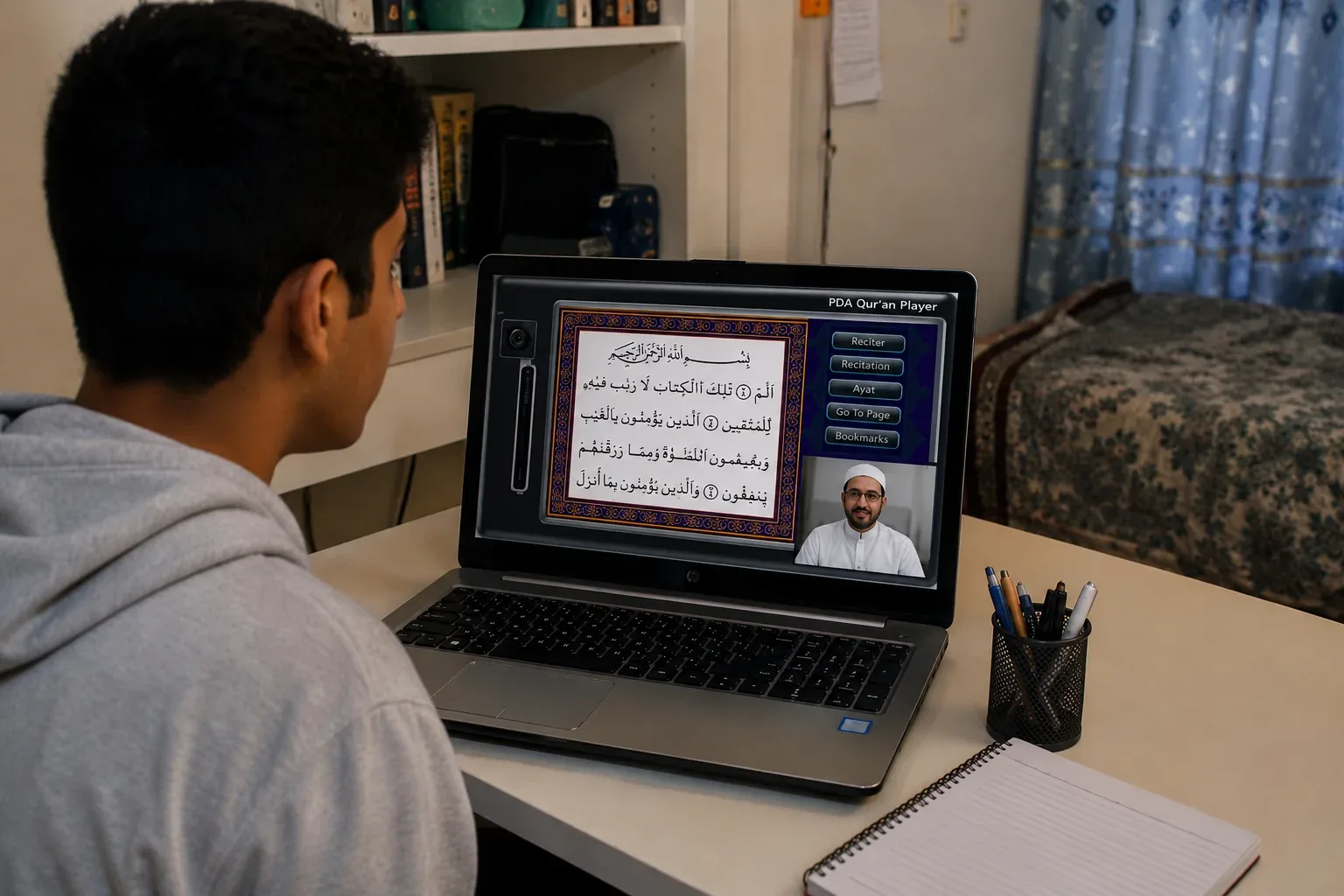
A course can have a detailed curriculum while giving the student very little time to read.
That matters. A child learning to read Quran needs regular opportunities to sound out words, read passages aloud, make mistakes, hear the correction, and try again. If most of the session consists of the teacher explaining while the child listens, the lesson may look productive without providing much reading practice.
Parents should ask how a typical session is divided.
The quality of correction is also worth watching. If a child repeatedly confuses two letters or produces the same sound incorrectly, a Quran teacher for children needs to notice the pattern. Correcting one word and immediately moving on may leave the underlying problem untouched.
Telling a child that a pronunciation is wrong is not enough either. The correction needs to show what should change.
Parents looking at dedicated
Quran classes for kids can compare how programs describe reading practice and teacher interaction, then ask what those things look like during an ordinary lesson.